


Evidence grade C
Research stage: Small human sleep studies from the 1980s and early 1990s with inconsistent findings; FDA states emideltide is not a component of any FDA-approved drug and is not a registered drug in any country FDA searched (July 2026).
Product description
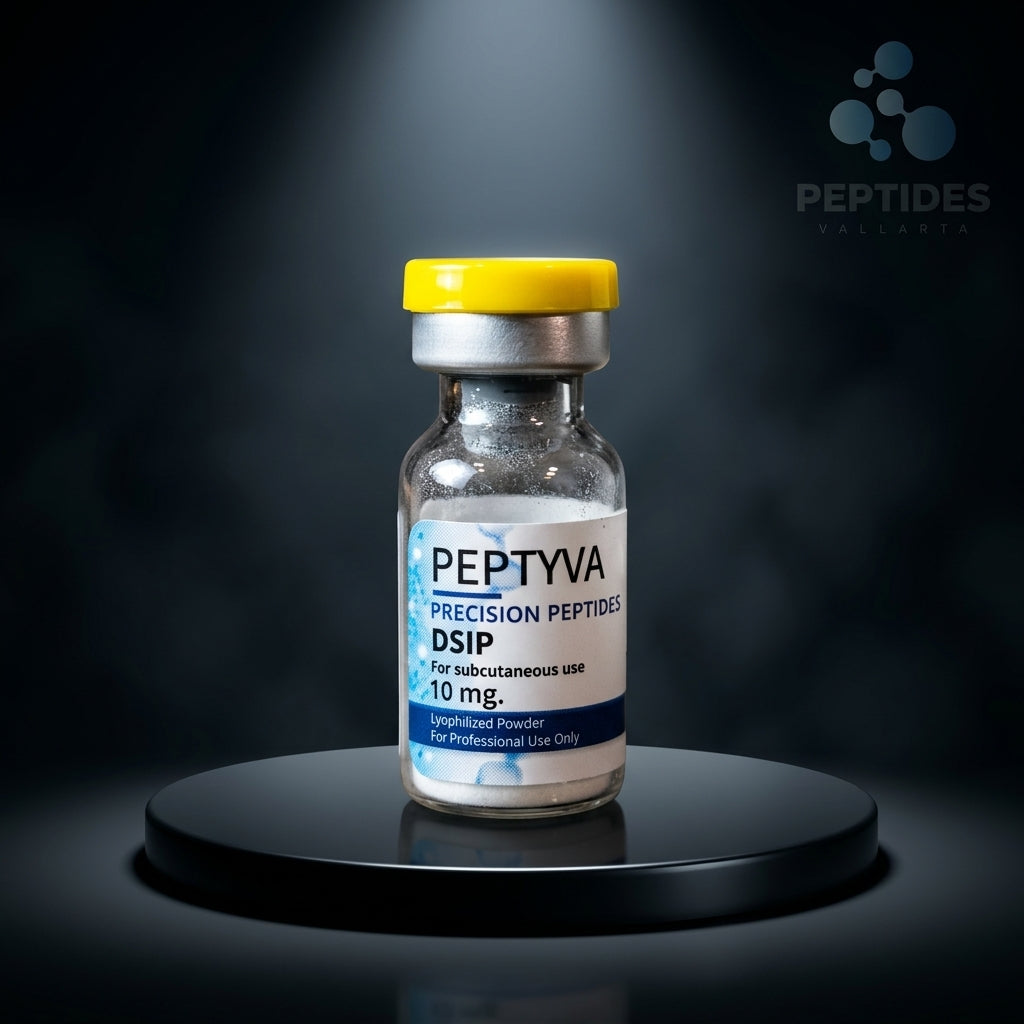
DSIP (delta sleep-inducing peptide, emideltide) is a nine amino acid peptide first isolated in 1977. This PEPTYVA 10 mg vial is supplied for laboratory research use only; small historical human studies report inconsistent findings.
DSIP 10 mg Emideltide Research Peptide
|
Alternate name |
Delta sleep-inducing peptide; emideltide (INN) |
|
Compound class |
Nonapeptide (9 amino acids) |
|
Format |
Vial; physical form as stated on the PEPTYVA label |
|
Strength(s) |
10 mg per vial |
|
Sequence |
WAGGDASGE (Trp-Ala-Gly-Gly-Asp-Ala-Ser-Gly-Glu) |
|
Molecular formula |
C35H48N10O15 |
|
Molecular weight |
848.8 g/mol |
|
CAS number |
62568-57-4 |
|
Purity |
Stated per lot on the Certificate of Analysis |
|
Manufacturer |
PEPTYVA, Mexico |
What is DSIP?
DSIP (delta sleep-inducing peptide), also known by the international nonproprietary name emideltide, is a nine amino acid peptide, and this PEPTYVA vial contains 10 mg. It is supplied for laboratory research use only, with a lot number for traceability. It is not a medicine and is not sold for use in people.
Its sequence is Trp-Ala-Gly-Gly-Asp-Ala-Ser-Gly-Glu. The Schoenenberger and Monnier group in Basel isolated it in 1977 from the cerebral venous blood of rabbits and described it as a delta-EEG enhancing nonapeptide. FDA's 2026 review uses the name emideltide, while the 1980s and 1990s papers cited on this page use DSIP.
How is DSIP studied in research?
DSIP is studied mainly in animal sleep and EEG models and in neuroendocrine research. FDA's 2026 review summarizes animal studies in rabbits, cats and rats that reported increased EEG delta wave power and changes in sleep duration that differed by species.
The mechanism remains unclear. Animal data suggest involvement of the opioid system, although DSIP does not appear to bind opioid receptors directly, and studies report a half-life under 10 minutes with breakdown by peptidases. A 2006 review called the sleep hypothesis poorly documented, partly because no DSIP gene, precursor protein or receptor has been isolated. Research topics include:
- EEG and sleep architecture in animal models
- Neuroendocrine signaling, including stress hormone release in rodents
- Peptide stability and transport across the blood-brain barrier
- DSIP-like immunoreactivity in hypothalamic tissue
What does the current evidence show?
Human evidence for DSIP is limited and inconsistent. Small studies by Schneider-Helmert and colleagues in the 1980s reported sleep changes in people with chronic insomnia, while two double-blind, placebo-controlled studies with 6 and 16 participants (Monti 1987; Bes 1992) did not reach the same conclusions.
Bes and colleagues judged the effects they measured to be weak and possibly influenced by changes in the placebo group. FDA's 2026 review described the human data as inconclusive and at best preliminary, citing small samples, weak controls and differing study designs. Open-label studies on alcohol and opioid withdrawal (1984 and 1998) had no comparison groups, and the most recent human study FDA summarized dates from 1998.
How does DSIP differ from Selank and Semax?
DSIP is a nonapeptide studied mainly in sleep EEG research, while Selank and Semax are separate peptides with their own formats, including nasal solutions, and their own route-specific evidence. Each product in the Sleep & neuroregulation collection carries its own evidence grade and documentation.
What is the regulatory status of DSIP?
DSIP is not an approved medicine. FDA states that emideltide is not a component of any FDA-approved drug and reported in July 2026 that it is not a registered drug in any country FDA searched. FDA staff also proposed that emideltide not be added to the 503A bulks list used for compounding, and FDA noted that the sleep medicine guidelines it reviewed do not mention emideltide.
In Mexico, medicines require a registro sanitario under the Ley General de Salud (Article 376). This vial is supplied as laboratory research material and is not sold as a medicine.
Documentation
Each DSIP vial carries a PEPTYVA lot number. Request the Certificate of Analysis for your lot through our contact page before you order. A COA typically lists identity by mass spectrometry, purity by HPLC, salt form, appearance, lot number and dates.
Storage and handling
Keep the unopened vial sealed in its original carton, away from light and heat, at the temperature printed on the PEPTYVA label. Check the seal and lot number on arrival and contact us if the packaging is damaged.
Supplier statement (PEPTYVA). Supplier positioning, not verified by Peptides Vallarta.
Of interest in relaxation, recovery and sleep architecture.
Regulatory status
- United States
- Not a component of any FDA-approved drug. In July 2026, FDA staff proposed that emideltide (free base and acetate) not be included on the 503A bulks list; FDA issues its final determination after the advisory committee process.
- Mexico (COFEPRIS)
- Supplied as laboratory research material and not sold as a medicine. Under the Ley General de Salud, medicines require a registro sanitario (Article 376).
References
References pending.
Research use disclaimer
Research use only. This product is sold exclusively for laboratory research and in vitro analysis. It is not for human or veterinary use. It is not a medication, drug or medical device, and it is not intended to diagnose, cure or prevent any condition.
The buyer is responsible for safe handling, storage and disposal in line with applicable regulations.
- Choosing a selection results in a full page refresh.
- Opens in a new window.